Texas Holdem Poker in Canada: A Practical Guide for Real Players
Texas holdem poker looks simple from the outside. Two cards in your hand, five cards on the board, best five-card hand wins. That is the clean version. The real version is messier and more interesting.
You fold hands that feel playable. You call once and regret it on the turn. You win a pot with ace-high and then lose twice as much with top pair because the board got ugly and you ignored it. That is poker. The cards matter, but the decisions around them matter more.
Holdem-poker.net is built for Canadian players who want to understand the game properly before treating it like another casino product. Texas Hold’em is not roulette with cards. It is also not a magic side income because you watched three final-table clips and learned what a continuation bet is. It sits in the middle: skill-based, swingy, sometimes slow, sometimes brutal, and very easy to play badly if you let emotion drive the session.
This guide covers the full Hold’em picture: rules, hand rankings, online poker, live poker, cash games, tournaments, bonuses, rake, bankroll, payments, mobile play and safer gambling. Not every player needs every section right away. A beginner should start with the rules and hand strength. A returning player may care more about rake, table selection and bankroll leaks. A Canadian player looking online needs to think about province, licensing and withdrawals before clicking a deposit button.



Texas Hold’em Is Easy to Learn, Not Easy to Play Well
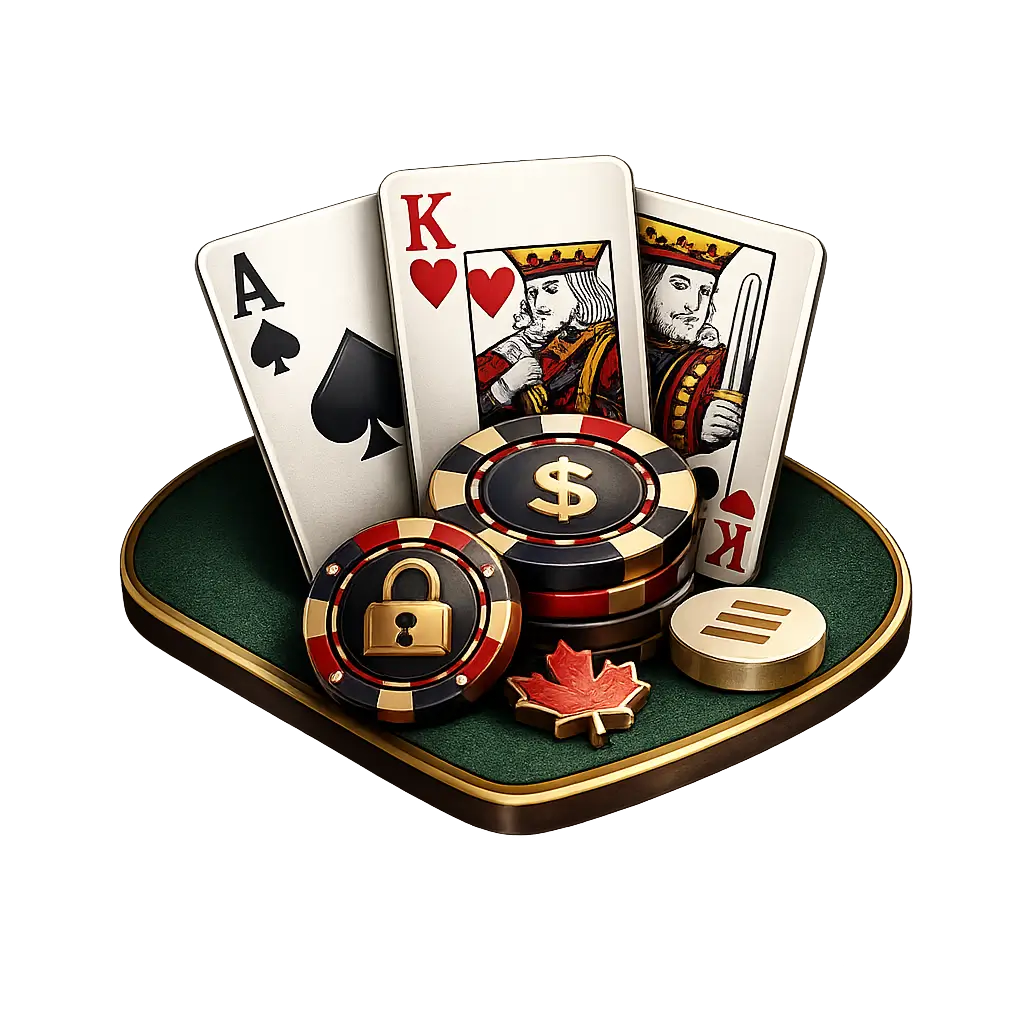
A Hold’em hand starts with two private cards. These are your hole cards. Then five community cards are dealt in stages: the flop, the turn and the river. You make the best five-card poker hand using any mix of your two private cards and the board.
The betting rounds create the game:
pre-flop, flop, turn, river.
That rhythm is easy enough. The problem is that your hand keeps changing value. Pocket queens feel strong before the flop, but they do not love an ace-high board with three opponents still hanging around. Ace-king looks premium, then misses completely. A small pair can become a set and quietly take a stack from someone who refuses to fold top pair.
Most new players do not lose because they misunderstand the rules. They lose because they overrate medium hands. They call because they are curious. They defend blinds because folding feels passive. They chase draws without counting the price. They sit too long after the session has clearly turned bad.
That is why the first useful poker skill is not bluffing. It is restraint.
Hand Rankings Need to Be Automatic
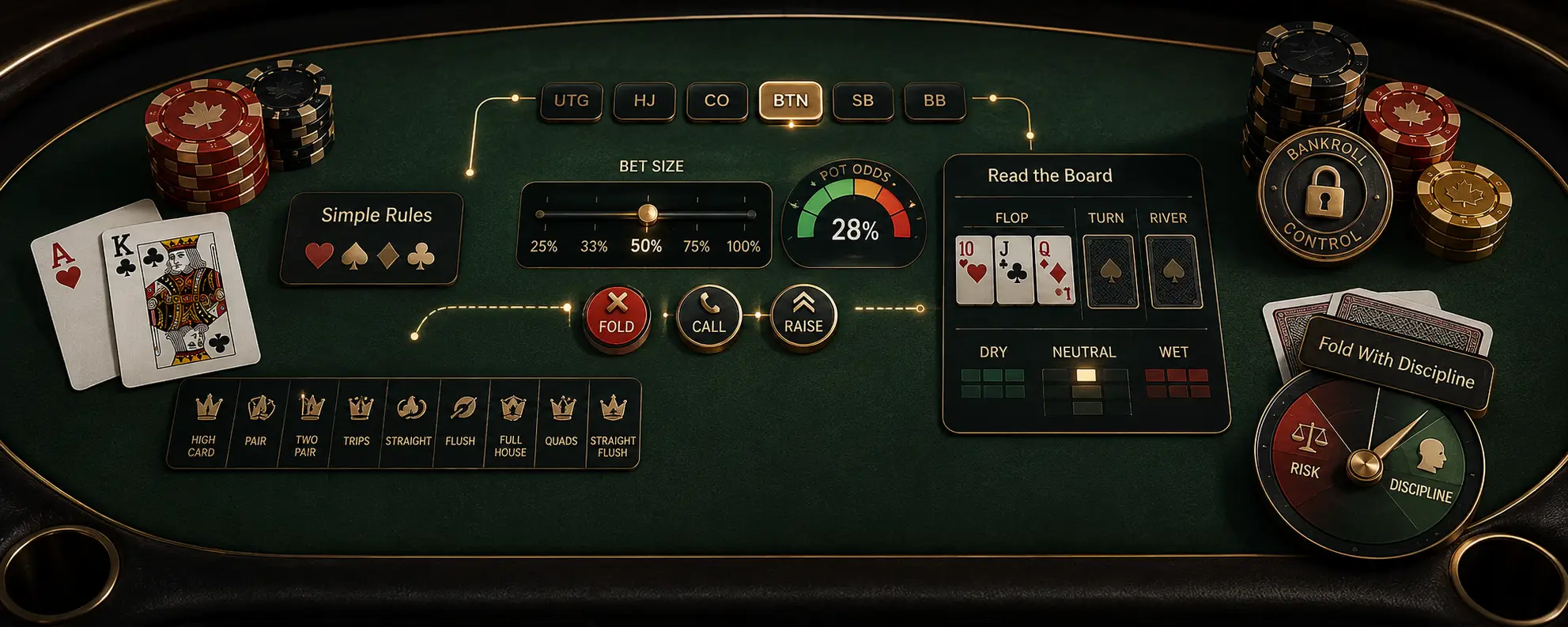
You cannot play comfortably if you still have to think about whether a straight beats a flush. Learn the order until it feels boring. Boring knowledge saves money.
| Rank | Hand | Simple meaning |
|---|---|---|
| 1 | Royal flush | A-K-Q-J-10, same suit |
| 2 | Straight flush | Five connected cards, same suit |
| 3 | Four of a kind | Four cards of one rank |
| 4 | Full house | Three of a kind plus a pair |
| 5 | Flush | Five cards of one suit |
| 6 | Straight | Five connected cards |
| 7 | Three of a kind | Three cards of one rank |
| 8 | Two pair | Two different pairs |
| 9 | One pair | One pair only |
| 10 | High card | No made hand |
Kickers are where beginners get caught. Ace-ten and ace-queen can both make top pair, but they do not stand in the same place once money goes in. Weak kickers create hands that look too good to fold and too weak to build a serious pot. That is an uncomfortable zone, and poker has many of those.
How to Play Texas Hold’em Without Bleeding Chips Early
The first stage is not about becoming clever. It is about becoming less expensive.
Play tighter from early position. Open more hands closer to the button. Respect raises more when you will be out of position after the flop. Do not limp every hand just because the table allows it. If you want to enter a pot, raising is often cleaner than calling and hoping.
Position changes everything. Acting last gives you more information. You see who checks, who bets, who looks interested and who seems ready to give up. Acting first means guessing more often. That is why the same hand can be playable from the button and a fold from under the gun.
A lot of beginner poker strategy can be boiled down to this:
- stop playing weak aces as if they are premium hands;
- do not chase draws when the bet is too large for the reward;
- value bet strong hands instead of getting fancy;
- avoid big pots with one pair unless the situation is clear;
- leave before tilt turns one mistake into six.
The last point matters more than people admit. Online poker makes it very easy to reload, click into another tournament or jump to a higher table because you feel “due.” That is not strategy. That is frustration wearing a poker hoodie.
Cash Games, Tournaments and Sit & Go Tables Do Not Feel the Same
Texas Hold’em changes shape depending on the format. A cash game is not a tournament with no ending. A tournament is not just a cheap way to win a large prize. The pressure, stack value and decision-making are different.
| Format | What it feels like | Good fit for | Main risk |
|---|---|---|---|
| Cash games | Flexible, steady, sometimes grindy | Players who want to enter and leave freely | Deep stacks make stubborn calls expensive |
| Multi-table tournaments | Long, swingy, high-pressure late | Players who like structure and big prize ladders | You can play well for hours and still miss the money |
| Sit & Go | Shorter and more contained | Players who want a clear start and finish | Endgame mistakes can erase a good start |
| Free poker | Useful but unrealistic | Learning rules and software | Bad habits form because nobody values chips |
| Live poker | Slower and more social | Players who enjoy table presence | Fewer hands, higher time cost |
| Mobile poker | Convenient but easy to misuse | Short, controlled sessions | Distraction and rushed decisions |
Cash games are usually the cleanest place to learn. Blinds stay fixed, stack depth is easier to understand and you can leave when the game stops being good.
Tournaments have a different pull. A small buy-in can carry a big prize at the top, which is exactly why they attract so many players. But tournament poker is rough on patience. You can make good decisions for two hours, lose one all-in and be done. That is not injustice. That is the format.
Sit & Go poker can be a decent bridge between the two. It gives structure without requiring a full evening, and it teaches short-stack decisions faster than deep cash tables do.
Online Texas Hold’em in Canada: The Part Players Should Not Skip
Canadian poker is not one neat national market. Gambling is handled through provincial systems, and Ontario has its own regulated iGaming market. In other provinces, players may see a mix of provincial platforms, international poker rooms and offshore brands.
That means a Canadian player needs to slow down before treating any poker room as “available” just because the signup page loads.
In Ontario, regulated sites can be checked through iGaming Ontario and AGCO information. Outside Ontario, the picture depends on the province and the operator. Some players will use provincial options. Some will look at international poker platforms. Either way, the same basic questions matter: who operates the site, what licence is shown, what payment methods work for withdrawals, and what happens if there is a dispute?
A good poker room makes those answers easy to find. A weak one hides them behind vague footer text, slow support replies and bonus pages that say plenty about rewards but very little about cashing out.
A Licence Helps, But It Does Not Make the Game Soft
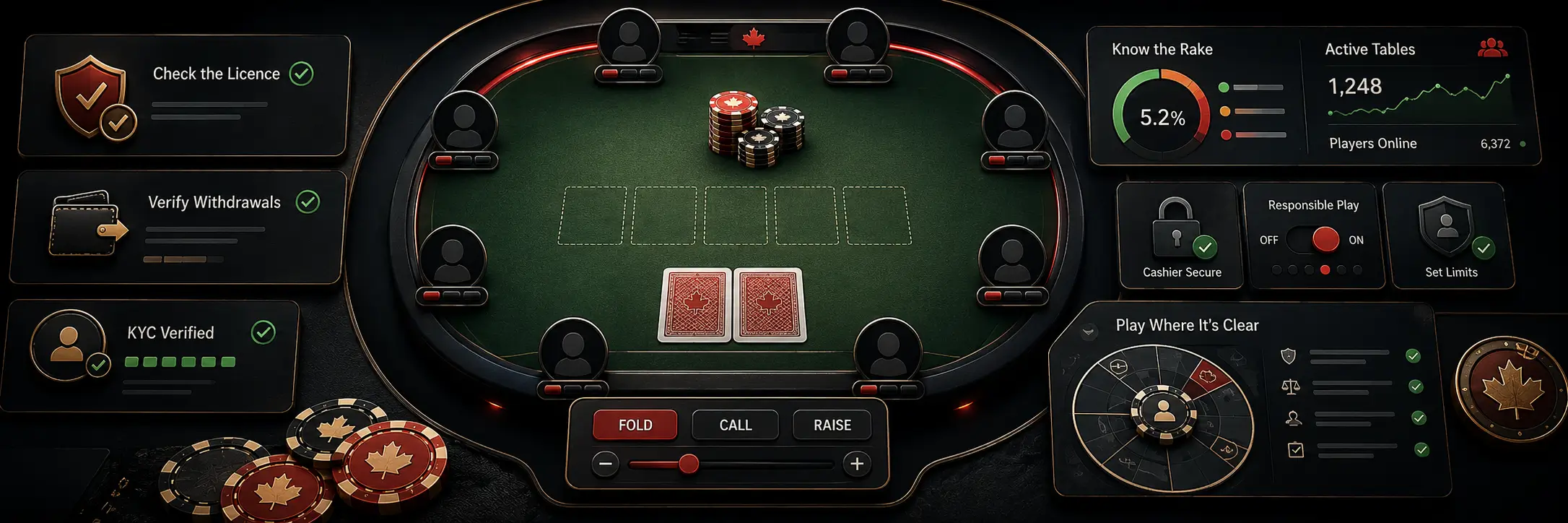
Licensing is not a poker strategy. It does not lower variance, improve your starting hands or make bad calls profitable. What it can do is give the site a clearer framework around player verification, responsible gambling tools, complaint handling, game integrity and payment standards.
That is still important.
The mistake is treating a licence badge like a quality score for the tables. A regulated room can still have tough games. An attractive promotion can still have awkward terms. A clean mobile app can still offer poor rake value at certain stakes.
Licensing answers one question: “Is this operator subject to oversight?”
It does not answer: “Can I beat this game?”
The Lobby Tells You More Than the Homepage
A poker homepage is marketing. The lobby is reality.
Look at the stakes that are actually running. Check whether the tables near your level have traffic. See if tournaments match your schedule. Watch the average pot sizes. Notice whether the room is full of short-stack regulars, casual limpers, aggressive multi-tablers or empty tables waiting for action.
Table selection is one of the least glamorous poker skills, and one of the most useful. A slightly weaker player at a good table may do better than a stronger player sitting in a rake-heavy, reg-packed game out of ego.
The best table is not always the biggest one. It is the one where your decisions have room to work.
Bonuses, Rakeback and Poker Rewards Can Be Useful — Carefully
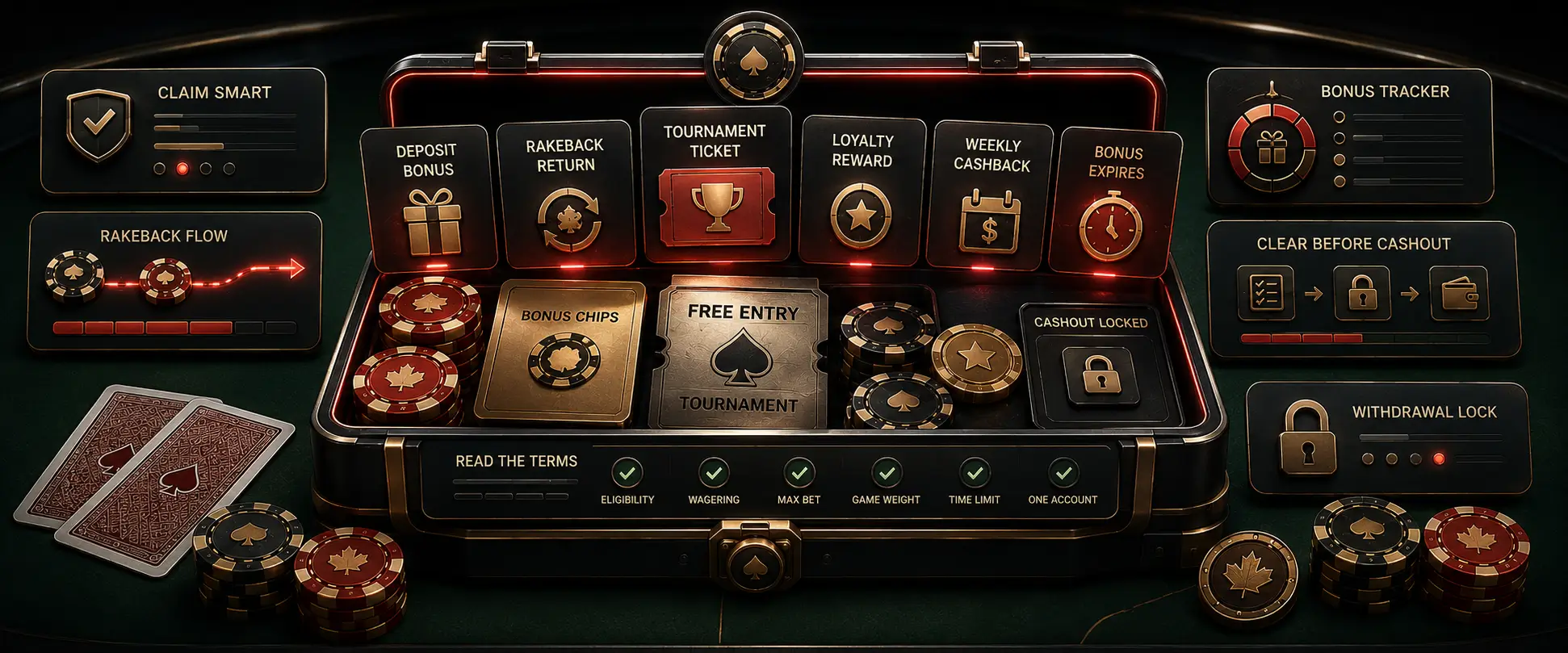
Poker bonuses are often less straightforward than they look. A deposit match may clear only as you generate rake. A tournament ticket may expire before you find the right event. A leaderboard may reward volume more than good play. Rakeback can help regulars but barely matter for someone who plays a few low-stakes sessions per month.
This is where many players get pulled off their normal plan. They play longer to clear a reward. They enter tournaments they do not actually like. They move up in stakes because the promotion feels close. That is how a bonus starts costing more than it gives back.
Before taking a poker bonus, read the terms like a player, not like a bargain hunter. The key details are usually the clearing rules, eligible games, expiry dates, minimum deposit, tournament restrictions and whether the bonus affects withdrawals.
A modest reward that fits your normal play is better than a huge offer that pushes you into bad volume.
Payments: Deposits Are the Easy Half
Most poker sites are good at taking deposits. That is not where the real test is.
The better question is how withdrawals work. Can you cash out to the same method? Is account verification required first? Are there minimum withdrawal amounts? Does the site explain processing times clearly? Are fees possible through the operator or payment provider?
Canadian players may see cards, bank transfer, Interac-style payments, e-wallets, prepaid options or crypto, depending on the poker room and location. Availability can change. A payment method that works for deposits may not be useful for withdrawals.
That is especially true with prepaid methods and some cards. They can be convenient on the way in and awkward on the way out.
If you plan to play for real money, verify the account early. Waiting until after a win to discover missing documents, name mismatches or payment restrictions is a bad kind of suspense.
Mobile Poker Is Convenient, Which Is Exactly the Risk
Mobile poker is not a problem by itself. A good mobile poker room can be smooth enough for casual tables, quick tournaments, account checks and short evening sessions. The issue is how easy it becomes to play without really sitting down to play.
Poker while distracted is usually poor poker. You miss stack sizes. You call because the timer is running. You forget how the hand developed. You play one more orbit because the phone is already in your hand.
For short, low-stakes sessions, mobile poker works. For deep cash decisions, final-table spots or multi-table play, a larger screen is usually better. Convenience should not be mistaken for control.
Free Texas Hold’em Poker Has a Place
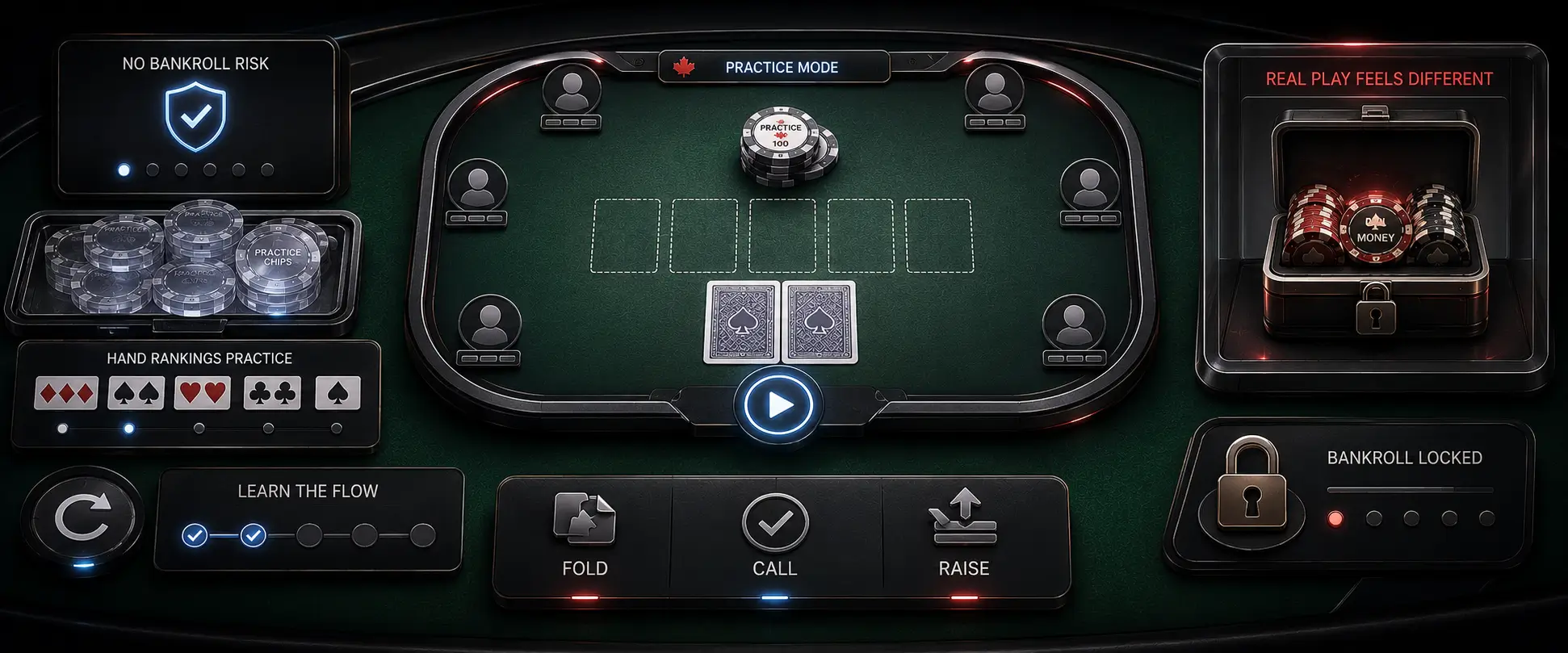
Free poker is useful for learning the mechanics. It helps with hand flow, betting buttons, blinds, board reading and basic confidence. It is also a low-risk way to test a new poker platform before depositing.
But free poker is strange poker. People call too much. They shove because nothing hurts. They chase every draw. You can learn the software there, but you will not learn real pressure.
Use free Texas Hold’em poker as a practice room, not a measuring stick. If you beat play-money tables, that does not prove you are ready for tougher real-money games. It proves you understand the buttons and basic rhythm. That is a start, not a finish.
Live Poker Is Slower, More Human and Less Forgiving in Its Own Way
Live Texas Hold’em has a different texture. The hands come slower. The table talk changes the mood. You can watch how people bet, stack chips, hesitate and react to boards. Some players enjoy that human side more than online poker.
The trade-off is cost and volume. You see fewer hands per hour, sessions take more planning and mistakes feel heavier because the pace gives them more weight. Live poker also adds etiquette: acting in turn, protecting your cards, following betting rules and not slowing the table with avoidable confusion.
One important distinction: live casino poker games are not always the same as player-versus-player Texas Hold’em. Some casino games use poker hands but pit you against the house. That is a different product with a house edge, not the same as a cash table where you compete against other players and pay rake.
The names can look similar. The economics are not.
What a Good Poker Site Should Actually Get Right
A poker site does not need fireworks on every screen. Most serious players care about quieter things: tables that load properly, rake that is not buried in small print, withdrawals that make sense, and enough traffic at the stakes they actually play.
The lobby usually tells the truth faster than the homepage. If the room advertises poker heavily but only has a few low-stakes tables running at normal Canadian evening hours, that matters. If tournaments look good on paper but the schedule is thin, that matters too. A shiny welcome page will not help much if you cannot find a decent table.
The basics are not glamorous, but they are the things worth judging first: licensing details, rake structure, tournament fees, cashier rules, withdrawal methods, support quality and account verification. A site that explains these clearly already feels more serious than one that hides behind vague marketing copy.
Software matters as well, just not in the way casino ads usually sell it. Good poker software should stay out of your way. Tables should open quickly. Bet buttons should be clear. Hand histories should be easy to find. Mobile play should not feel cramped or jumpy. Tournament filters should not make you dig through clutter just to find a normal buy-in.
Poker is already a decision-heavy game. The platform should not add extra friction.
A useful poker room feels boring in the right places. Clear cashier. Clear rake. Clear rules. Clear account tools. If the site looks exciting but the practical details are hard to pin down, I would treat that as a warning sign rather than a mystery worth solving.
Safer Poker Play in Canada
Poker has one trap that slot games do not have in the same way: it lets you blame yourself for every loss.
Sometimes that is fair. You made a bad call, chased a weak draw, tilted after a river card or played too long. Other times, you made the right decision and lost anyway. That mix of skill and variance is what makes Texas Hold’em interesting, but it can also pull players into dangerous thinking.
The line to keep is simple: poker is paid entertainment. It should not become a rent plan, a debt solution or a way to “fix” last night’s session.
Set the session before the session sets you. Decide the buy-in limit. Decide how long you are playing. Decide what makes you stop. Those choices are much easier before you are card-dead, annoyed or one bad beat away from opening a higher table.
A few warning signs are worth taking seriously: playing longer than planned, hiding losses, moving up to win money back, checking tables when you meant to do something else, or feeling irritated when you cannot play. That is the point where a break is not weakness. It is just good damage control.
Canadian players have access to responsible gambling tools through licensed operators, provincial programs and support organisations. Ontario players will often see tools such as limits, time-outs and self-exclusion inside regulated platforms. Use them early if poker starts feeling heavier than entertainment.
Good bankroll management protects your poker money. Safer play protects everything around it.
Who Holdem-poker.net Is For
Holdem-poker.net is for players who want to understand the game before being sold the dream around it.
It is for the beginner who knows the hand rankings but still overplays top pair. It is for the casual Canadian player trying to figure out the difference between a real poker room, a casino poker game and a flashy offshore lobby. It is for tournament players who keep building stacks and then punting them near the bubble. It is for anyone who has ever called while thinking, “I’m probably beat,” and then acted surprised when they were.
The site is not here to pretend poker is easy money. It is also not here to make the game sound scary. Texas Hold’em is a brilliant game when you approach it properly: patient, competitive, tactical, frustrating, rewarding and occasionally ridiculous.
The aim is to help you play with a little more control. Better starting hands. Better table choices. Fewer ego calls. Less chasing. More attention to rake, bonuses, bankroll and site quality.
The cards matter. The habits matter more.
FAQ
Is Texas Hold’em poker legal in Canada?
Canada does not work like one single online poker market. Gambling is handled province by province, so the answer depends on where you live and which operator you are using. Ontario has its own regulated iGaming market, while other provinces may offer different options. Before playing for real money, look at the operator’s licence, location rules and terms for your province.
Is Texas Hold’em more skill or luck?
Both are always in the room. Luck decides which cards come today. Skill decides which hands you play, how much you risk, when you fold, how you size bets and whether you keep control after losing a pot. Over one session, luck can be loud. Over many sessions, bad decisions become harder to hide.
What should a beginner learn first?
Learn hand rankings, position and starting-hand discipline before anything fancy. A beginner who folds more bad hands, stops chasing poor draws and avoids big pots with weak one-pair hands is already ahead of many new players. Bluffing can wait. Most low-stakes poker is won by making fewer expensive mistakes.
Can I play online Texas Hold’em in Canada?
Many Canadian players can access online poker, but availability depends on province and operator. Do not rely only on the fact that a registration page opens. Look at the site’s licence, accepted regions, payment rules and withdrawal conditions before depositing.
Are free Texas Hold’em games worth using?
Yes, as a training room. Free poker helps you learn the flow of the hand, the buttons, blinds, betting rounds and basic board reading. It does not teach real pressure very well because play-money tables are often loose and chaotic. Use free games to get comfortable, not to judge your real-money skill.
Cash games or tournaments — which is better for learning?
Cash games are usually cleaner for learning because the blinds stay stable and you can leave when you want. Tournaments are more exciting, but they bring long dry spells, rising blinds and pressure around payouts. A new player can try both, but cash games are often better for working on fundamentals.
Are poker bonuses worth taking?
Sometimes. The useful ones fit the way you already play. The weak ones push you into extra volume, awkward tournaments or stakes you would not normally choose. Read how the bonus clears, which games count, when tickets expire and whether the reward affects withdrawals.
Why does rake matter so much?
Rake is the cost of sitting in the game. In cash games, it comes out of pots. In tournaments, it is part of the entry fee. Even if you are better than some opponents, high rake can make the game much harder to beat. A soft table with fair rake is often better than a flashy room with poor value.
What is the best payment method for poker in Canada?
The best method is the one that works for both deposits and withdrawals on the site you are using. Some options are quick for deposits but awkward for cashouts. Look at withdrawal support, verification requirements, limits and possible fees before choosing a method.
How much money should I start with?
Start with money you can lose without changing your mood, bills or decisions. That number is different for everyone. If losing one buy-in makes you want to chase, the stake is too high. Small games are not embarrassing; they are where many players learn without turning every mistake into a serious problem.
Is mobile poker okay?
Mobile poker is fine for short, simple sessions. It is not ideal when you are distracted, tired or playing important tournament spots. A phone makes it too easy to click quickly and think later. If you play mobile, keep the stakes modest and the session controlled.
How do I know if a poker site is safe enough to try?
Look for practical signs: visible licence details, clear rake, real traffic, understandable withdrawal rules, proper verification information and responsible gambling tools. If the site gives you big promises but makes the boring details hard to find, that is not a great sign.
Always confirm current bonus terms, legal availability, payment limits and withdrawal rules with the operator before playing for real money.